

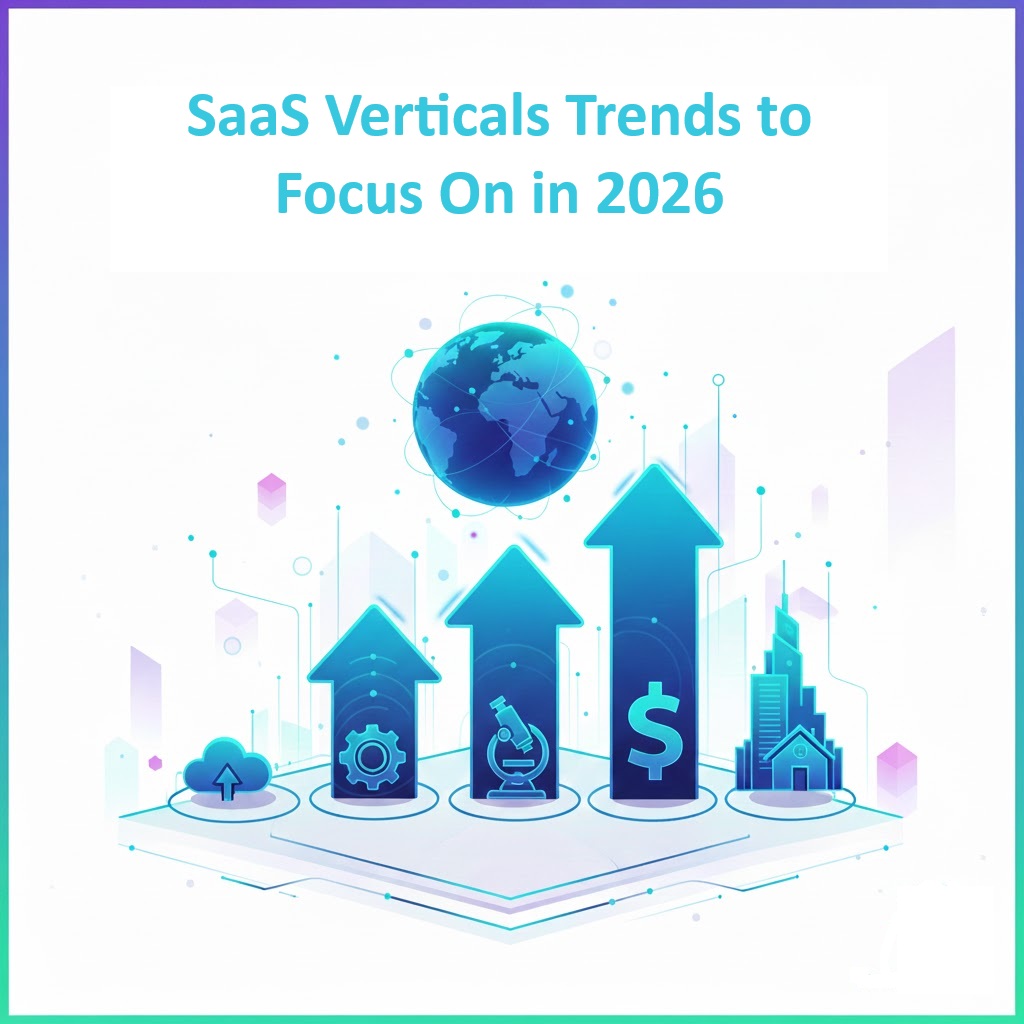
In the world of SaaS, vertical solutions are no longer a niche play; they’re becoming the default choice in many industries. Vertical SaaS platforms let companies offer specialized capabilities tailored to specific markets like healthcare, manufacturing, construction, finance, and logistics. They deliver workflows, integrations, and compliance baked-in advantages that broad, horizontal SaaS tools struggle to match.
As we move into 2026, founders, product leaders, and IT buyers need to understand the major forces shaping vertical SaaS. Below are the key trends that will shape the future of vertical SaaS over the next few years.
SaaS Verticals Trends: How Industry-Specific Cloud Platforms Are Evolving
SaaS verticals trends are reshaping how companies buy and use software, shifting the focus from generic tools to deeply specialized, industry-grade platforms. Instead of trying to force one horizontal system to fit every business, vertical SaaS solutions are built around the unique workflows, regulations, data models, and integrations of sectors like healthcare, manufacturing, construction, finance, and logistics. In 2026, this shift is being accelerated by embedded AI copilots, end-to-end automation, real-time analytics, IoT and edge intelligence, and stronger security and compliance by design. In the sections below, we explore the key SaaS verticals trends that will define this next wave of industry-specific platforms and how they will shape the future of software in each sector.
1. AI, GenAI Copilots & Deep Automation
Machine learning has been part of vertical SaaS for years, but in 2026, the conversation is dominated by generative AI and AI copilots embedded directly into industry workflows.
Vertical SaaS vendors are:
- Building AI copilots specific to each industry.
- Think: a claims copilot for insurance, a care copilot for clinicians, or a deal copilot for commercial real estate. These assistants understand domain language, documentation formats, and regulatory constraints.
- Automating complex, multi-step workflows
- Instead of just suggesting the next best action, AI now autonomously drafts emails, fills forms, flags anomalies, and routes approvals based on rules and learned patterns.
- Using domain-specific models, not just generic LLMs
- Vertical SaaS providers are training or fine-tuning models on specialized datasets (e.g., radiology notes, procurement contracts, maintenance logs), which produce more accurate and trusted outputs.
The result: vertical SaaS platforms that don’t just streamline work, but actually do a meaningful portion of the work for users.
2. Industry-Grade Mobility, APIs & Composable Architectures
Mobile access is now table stakes. In 2026, the focus is on composable, API-first vertical SaaS that can sit comfortably in complex enterprise environments.
Key shifts:
- Mobile as a primary interface for frontline roles
- Field technicians, nurses, drivers, and warehouse teams increasingly work out of deeply specialized mobile apps (iOS, Android, rugged devices) with offline support, device-native features (camera, GPS, scanners), and strict security.
- API-first, event-driven integrations
- Modern vertical platforms expose rich APIs and webhooks so customers can plug into ERPs, CRMs, EHRs, data warehouses, and messaging tools. Integration marketplaces and native connectors are becoming a major buying criterion.
- Composable Lego-style suites
- Instead of monolithic products, vertical SaaS vendors are offering modular capabilities (e.g., scheduling, billing, inventory, compliance) that customers can assemble into the stack that fits their workflows.
Cloud computing continues to underpin all of this. Still, the narrative is shifting from moving to the cloud to optimizing within the cloud with scaling, cost control, and data residency handled transparently by the vendor.
3. Security, Compliance & Data Governance as Differentiators
Security has always been important, but by 2026, it’s a core part of the value proposition in vertical SaaS, especially in regulated industries.
Leading vendors are differentiating themselves with:
- Industry-specific compliance out of the box
- HIPAA for healthcare, PCI for payments, SOC 2 and ISO 27001 for enterprise customers, GDPR and region-specific privacy rules, and sector frameworks like FINRA, FDA, or local data regulations.
- Zero-trust architectures & granular access control
- Fine-grained permissions, attribute-based access control (ABAC), just-in-time access, and strong audit logging are now mainstream expectations.
- Secure data integration & interoperability
- Customers expect to pull and push data across multiple systems without sacrificing security or performance. Secure data sharing models, tokenization, and privacy-centric architectures are becoming standard.
In vertical SaaS, the platform that can prove security and compliance and reduce the customer’s regulatory burden often wins the deal.
4. Data Platforms, Interoperability & Real-Time Analytics
As more industries digitize, the volume of operational data being generated has exploded. In 2026, the winners in vertical SaaS are those that transform this raw data into real-time, actionable intelligence.
Trends shaping this area:
- Embedded analytics and dashboards tailored to each role
- Executives, frontline workers, and analysts each get views customized to their decisions: capacity planning, risk scoring, inventory optimization, or patient outcomes.
- Interoperability and common data models
- Vertical SaaS tools are increasingly built around industry-standard data schemas and integration frameworks, making it easier to sync with data warehouses, lakes, and lakehouses.
- Predictive and prescriptive insights
- Beyond basic reporting, platforms provide recommendations on what will happen and what we should do next: predictive maintenance schedules, churn alerts, dynamic pricing, and demand forecasts.
Big data is no longer just nice to have; it’s the backbone that powers AI features, automation, and the next generation of decision support in vertical SaaS.
5. IoT, Edge Computing & Real-World Automation
The Internet of Things (IoT) continues to play a critical role in many vertical SaaS categories, especially manufacturing, logistics, agriculture, energy, and smart buildings.
Key developments for 2026:
- Edge intelligence
- Instead of sending every data point to the cloud, more processing is happening at the edge on gateways, machines, and devices, enabling faster decisions, improved resiliency, and reduced bandwidth costs.
- Closed-loop automation
- Vertical platforms not only collect data from sensors and devices but also send commands back to equipment, robots, and control systems, creating fully automated feedback loops.
- IoT + AI for real-time optimization
- Combining streaming data from devices with AI models allows businesses to optimize energy usage, reduce downtime, improve safety, and extend asset lifespan.
Vertical SaaS that connects digital intelligence with physical operations is becoming a powerful lever for productivity and cost savings.
6. Open Source, Extensibility & Developer Ecosystems
Open source continues to shape how vertical SaaS is architected and extended.
In 2026, we see:
- Open core foundations with commercial layers
- Many vendors build on open source technologies (databases, message queues, ML frameworks, data platforms) to reduce costs and speed up innovation, while offering proprietary industry modules on top.
- Extensible platforms & app ecosystems
- Customers and partners can build custom modules, workflows, or integrations on top of the core product, turning vertical SaaS platforms into mini-ecosystems for that industry.
- Dev tools and SDKs designed for non-traditional developers
- Low-code and no-code capabilities allow business users, operations teams, and analysts to configure workflows, dashboards, and automations without writing full-scale code, critical for niche, rapidly changing industries.
This combination of open source, extensibility, and ecosystem thinking helps vertical SaaS vendors move faster while giving customers more control and flexibility.
7. UX, Change Management & Outcome-Based Value
As markets mature, user experience (UX) and measurable outcomes are becoming just as important as raw functionality.
Key patterns:
- Task-centric UX for specific roles
- Interfaces are designed around the exact daily tasks of nurses, dispatchers, underwriters, or technicians, not generic “user” personas. It will reduce training time and drive adoption.
- Embedded onboarding, training & playbooks
- In-app guides, checklists, and playbooks help teams adopt new workflows without needing separate training programs. Some platforms integrate change management best practices directly into the product.
- Pricing aligned with outcomes
- Usage-based, value-based, or outcome-based pricing is expanding in vertical SaaS. Instead of paying only per seat, customers might pay based on transactions processed, revenue generated, time saved, or assets managed.
In many verticals, the platform that can prove ROI quickly, not just promise it, is the one that retains and grows accounts.
8. Sustainability, ESG & Responsible Tech
By 2026, more industries will be asked to report on environmental, social, and governance (ESG) metrics. Vertical SaaS platforms are stepping in to help.
Examples include:
- Carbon and resource tracking in industry workflows
- Manufacturing, logistics, and construction platforms now support tracking emissions, energy usage, and waste at a granular level.
- Responsible AI and auditability
- With AI deeply embedded in workflows, customers expect explainability, bias monitoring, and clear audit trails for AI-driven decisions, especially in hiring, lending, healthcare, and public services.
- Sustainability as a feature, not an afterthought
- Vertical SaaS that can reduce resource use, optimize routes, or cut waste while improving margins will be particularly attractive to boards and regulators.
Conclusion
Vertical SaaS has moved far beyond “niche software for niche markets. By 2026, it is where some of the most advanced innovations are happening across AI, automation, analytics, IoT, and compliance.
By leaning into the trends above, businesses can:
- Build or adopt SaaS solutions specifically tuned to their sector.
- Deliver a better, more automated experience for customers and teams.
- Improve security, compliance, and data governance while reducing risk.
- Turn industry data into a strategic asset with real-time insights and predictions.
Companies that stay ahead of these vertical SaaS trends in 2026 will gain a durable competitive edge, launching new services faster, operating more efficiently, and adapting more quickly to regulatory and market changes. With the right investments in technology, data, and people, vertical SaaS becomes a powerful engine for long-term innovation and growth.



Leave a Reply